How to follow VALORANT Champions Shanghai group stage like a pro analyst
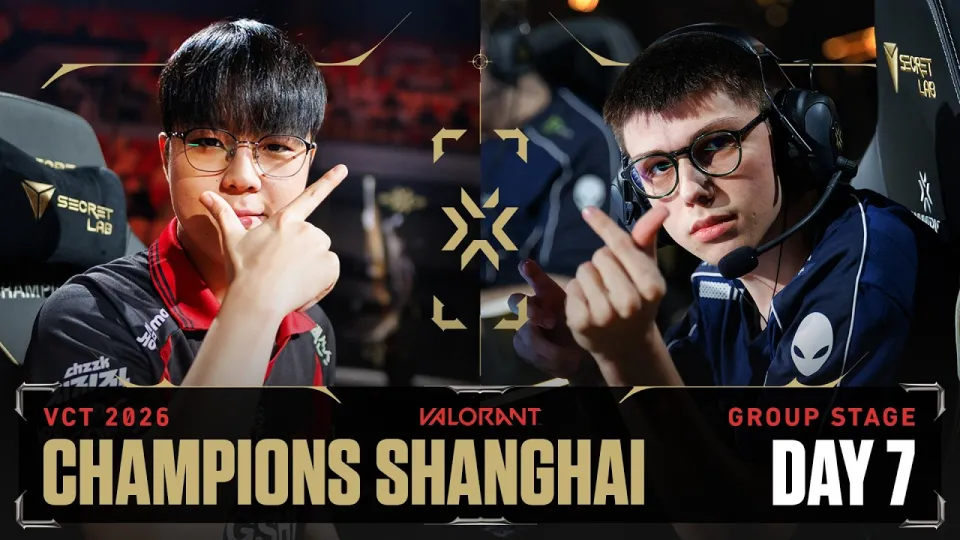
Video: VALORANT Champions Shanghai — Group Stage — Day 7
Want articles like this for your own video to promote it on YouTube and Google? Order them through the Telegram bot @sat_sit_bot. It writes articles around your video, embeds the video and publishes them on popular niche websites (no ads). Free trial — 50 articles.
· based on the channel VALORANT Champions Tour
Key takeaways
- VALORANT Champions Shanghai runs September 24 to October 18, with 16 teams from Americas, CN, EMEA and Pacific.
- Day 7 of the group stage is the focus of the official VCT broadcast on the VALORANT Champions Tour channel.
- Two different teams won Masters events in 2026, so Shanghai is the year's first true world champion decider.
- Repeated tech pauses dominated viewer discussion of the Day 7 stream, alongside criticism of CN teams' utility usage.
- Official updates and schedule details are posted via https://x.com/valorantesports.
To follow VALORANT Champions Shanghai properly, treat the group stage as a format puzzle rather than a highlight reel: sixteen teams from Americas, CN, EMEA and Pacific play from September 24 to October 18 for the 2026 world title, and Day 7 of the group stage is the broadcast to study for how the bracket is shaping up. The official VALORANT Esports updates feed on X is the fastest place to confirm schedules, results and broadcast changes before each match day.
What the VALORANT Champions Shanghai group stage actually decides
The group stage exists to cut sixteen teams down to the playoff bracket, and every match on Day 7 carries seeding weight rather than simple pride. The 2026 season already produced two different Masters champions, which means Shanghai is the first event where those winners, the regional qualifiers and the challenger squads all share one stage. For viewers, that makes group-stage results a preview of style clashes: Pacific and EMEA teams typically lean on structured defaults, while CN rosters are often judged on how they adapt when their set plays break down.
Reading the Day 7 broadcast without spoilers
The Day 7 VOD is long enough that most viewers want to watch matches in order without learning outcomes in advance. The practical approach is to open the video, jump to the match you care about using the chapter markers, and avoid the comment section entirely until you are done. Viewers of the stream specifically asked for a spoiler-free timestamp list, and the reply threads under the video are where that list lives, so keep them collapsed.
- Open the VOD from the VALORANT Champions Tour channel and pause before the first map.
- Use the description and pinned comments for match order, not for scores.
- Watch one series at a time and skip the analyst desk segments if you want to stay unspoiled.
- Mute chat overlays and the recommended-video sidebar, which often reveal winners.
Why tech pauses keep interrupting the VALORANT broadcast
Tech pauses are the most repeated complaint about the Day 7 stream, and they matter because they change how a series reads on VOD. A pause mid-round freezes momentum, resets utility timings in players' heads and stretches a two-map series into a much longer viewing commitment. When you watch the recording, expect gaps between maps and occasional freezes during pistol rounds; they are production issues, not part of the gameplay you need to analyze. If you are studying a specific team, note the pause points and judge their economy management from the rounds that actually ran cleanly.
What viewers are arguing about in the CN matches
The loudest debate around the group stage concerns the Chinese teams, and it is worth separating fair criticism from reaction. The recurring argument is that CN squads lose rounds they should win: eco upsets, failed 5v2 retakes and predictable utility once their opening strategy is scouted. That criticism has real substance when a team repeatedly defaults to the same executes, but it ignores how quickly the region's top rosters have closed the gap at international events. A fair read of a CN loss looks at retake coordination and mid-round calling, not just the final score.
There is also a counter-argument worth keeping in mind: several strong teams from other regions did not qualify for Shanghai at all, so judging CN depth against the full global pool is misleading. The group stage only shows which sixteen teams made it, not which region is deepest overall.
Players and moments worth tracking on Day 7
Individual form is the easiest thing to track when you watch a long VOD, because a single player's utility usage tells you how a team wants to play. Watch how duelists trade space on attack, how sentinels hold a site alone during a retake, and whether initiators use recon tools to open a site or to save a lost round. One widely shared moment from the stream involved a Yoru clone that briefly looked like it was helping hold a site, which is a good reminder that clone and decoy utility creates real confusion even at the top level. Veteran names still draw the biggest reactions from the crowd, and their clutch rounds are usually the ones clipped first.
Useful links for following VALORANT Champions Shanghai
All official channels for the event are listed below, and each one serves a different purpose during a long tournament.
- https://x.com/valorantesports — schedules, results and broadcast announcements
- https://www.facebook.com/ValorantEsports/ — event posts and photo drops
- https://www.instagram.com/valorantesports/ — behind-the-scenes content
- https://www.tiktok.com/@valorantesports — short clips and highlight edits
- https://www.twitch.tv/valorant — live broadcasts
The full VOD for Day 7 sits on the VALORANT Champions Tour YouTube channel, which is the source this breakdown is based on.
The takeaway
VALORANT Champions Shanghai is the tournament where the 2026 season's two Masters winners, the regional qualifiers and a new generation of challengers finally share one bracket, and the group stage is where that hierarchy gets tested. Day 7 is best watched as a study of adaptation: which teams adjust after a lost pistol, which ones abandon a broken execute, and which ones rely on individual heroics. Tech pauses and CN inconsistency are legitimate talking points, but neither replaces watching the rounds. For schedules, results and broadcast updates, follow the official VALORANT Esports account on X, and credit for the original broadcast goes to the VALORANT Champions Tour channel.
Source: VALORANT Champions Shanghai — Group Stage — Day 7 · Markdown version
Questions & answers
How many teams play at VALORANT Champions Shanghai?
Sixteen teams qualify from four regions: Americas, CN, EMEA and Pacific. They compete from September 24 to October 18 for the 2026 world championship title, with the group stage reducing the field before the playoff bracket.
Why does the Day 7 stream have so many tech pauses?
The pauses are production and technical issues on the broadcast side, not gameplay decisions. They stretch the runtime of the VOD, so viewers watching later should expect gaps between maps and occasional freezes during rounds.
Where can I find spoiler-free timestamps for the group stage VOD?
Viewers post timestamp lists in the comments under the official broadcast, often with a spoiler warning in the first line. Keep the comment section collapsed until you finish the series you want to watch.
Are the Chinese teams really the weakest region at Champions?
That claim is overstated. CN squads have shown weaknesses in retakes and utility creativity when set plays fail, but several strong teams from other regions did not qualify at all, so the sixteen-team field is not a full measure of regional depth.